14 haunted stately homes to visit this Halloween
Lavish, grand – and haunted? In these stately homes you’ll find eerie legends, ghostly residents and centuries of supernatural suspense. These are the most haunted houses in the UK...

The UK is peppered with historic sites, with over 4,000 castles across its varied landscape, and even boasts the most stately homes of any other country in the world. Of course, this many historic buildings inevitably paves the way for stories of their former residents, whom, in many cases are believed to have never left.
Tales of ghosts, ghouls, poltergeists and apparitions at Britain’s historic sites have been abundant for hundreds of years and, believe in them or not, you can’t deny they are intriguing.
Here we go on a journey through the most haunted houses and castles in the UK, all of which are open for visitors, if you dare...
1. Ham House, London
Often described as one of the most haunted houses in England, Ham House, a beautifully preserved 17th-century mansion, sits quietly on the banks of the Thames in leafy Richmond, but its past is anything but serene. The ghost of Elizabeth Murray, Duchess of Lauderdale, is said to linger here, her perfume still occasionally detected in empty rooms. Staff have also reported cold draughts, strange noises and eerie sensations in the basement.
2. Inveraray Castle
Inveraray Castle, which stands north-east of Glasgow on the shores of Loch Fyne, represents the classic Scottish castle of legend and is believed to be one of the most haunted houses in Britain.

Perhaps the most alarming of Inveraray’s quintet of ghosts is to be found in the MacArthur Room. The legend goes that in 1644, the Duke of Argyll fled his castle to escape capture from the Marquess of Montrose. When he deserted, he left behind a young Irish boy who had been in his employment as a harpist. Upon being discovered by Montrose’s men, the youthful musician might have wished that he had fled alongside his master. The Marquess had deployed Irish mercenaries who, outraged that a fellow countryman could be in the employ of their sworn enemy, slaughtered the boy, leaving his dismembered body on the duke’s bed.

Despite this gruesome and bloody scene having taken place in the old castle, so attached is the boy said to have become to the bed, he stayed with it even when it was moved to the modern castle.
3. Fulham Palace, West London

Located in London though it may be considered today, Fulham Palace existed as a country house residence for the Bishops of London for over 12 centuries. Forget a bucolic retreat however; switches in religious allegiances between Protestantism and Catholicism spelt tumultuous times for these religious figureheads.
Edward VI’s reign saw Catholic bishop Edmund Bonner packed off to Marshalsea prison, while Queen Mary’s reinstatement of Catholicism witnessed his successor, Bishop Ridley (1550-53), being burnt at the stake. These days, the palace is a tourist attraction, but one former inhabitant seems never to have left; Bonner is often spied by staff and visitors wandering empty hallways, his footsteps echoing in the silence. Join one of Fulham Palace’s ghost tours for the full experience of one of the most haunted houses in Britain
4. Glamis Castle, Angus, East Scotland

A ghost hunter’s dream, Glamis Castle – built in 1372 and owned throughout its history to the present day by the Bowes-Lyons family – is thought to be the most castle in Scotland.
Believers in the legend say that the castle is cursed, the jinx occasioned by one Sir John Lyon who removed an ancestral chalice from their seat at Forteviot, where it was intended to stay forever. Visitors should look out for the spectre of Earl Beardie, the castle’s most famous ghost. A guest in the house, he drunkenly expressed his outrage that no one would play him at cards, professing that, instead, he would play with the devil. As if on command, a tall man in dark clothes knocked at the door, offering his services. The pair sequestered themselves in a locked room, where all that could be heard was shouting and cursing.
An unsuspecting servant, curious to know what was going on, is said to have peeped through the keyhole, only to be blinded by a beam of light. The Earl then emerged to rebuke the peeping Tom, to find he’d been deserted by his partner, who had left with his winnings: the Earl’s soul. Those who listen carefully swear that they can still hear him rolling his dice and shouting forth bile. People – mostly children – have even reported that they have woken up to the alarming sight of the Earl peering into their faces. Visitors also report catching glimpses of the famous White Lady, a former resident who was burnt for witchcraft outside Edinburgh Castle and is thought to have roamed Glamis ever since; or indeed the lady with no tongue, famous for gruesomely pointing at her mutilated face.
5. Dorney Court, Windsor, Berkshire

Dorney Court, another one of the most haunted houses in Britain, is said to be haunted by the ghost of a bald woman, visible only to men. In the 19th-century, the resident Palmer family, disturbed by the lockless lady, invited a priest to investigate; the result, perhaps, would have disturbed them further. Having received an other-wordly instruction to tear down some paneling in the upstairs bedroom, he duly did so, only to find a concealed alcove, and within that, the shorn tresses of a young woman.
6. Longleat, Wiltshire, South-West

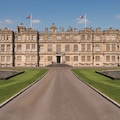
In the 18th century, Longleat was home to Louisa Carteret and her husband, Thomas Thynne, the 2nd Viscount Weymouth. The match was ill-fated; she was considered kind and beautiful, while he was bad-tempered and suspicious – the latter tendency exacerbated when it was suggested to him that Louisa’s relationship with one of the footman may not have been entirely innocent. Enraged, he attacked the servant, fatally pushing him downstairs and concealing his body beneath the flagstones in the basement, insisting later to his wife that the man had simply departed suddenly. A distraught Louisa caught a chill and died, aged 22, in childbirth in 1736, after which servants reported seeing her prowling the corridors, apparently in search of her footman. To this day, she is heard banging on doors, trying to unearth the mystery – a mystery to which the house holds the key, for when central heating was installed at Longleat, a body was indeed found beneath the flagstones, clad in 18th-century clothing.
7. Chillingham Castle, Northumberland

As castle’s go, the aptly named Chillingham in the weathered landscapes of Northumberland, has purported more than its fair share of ghost stories in its history. It is believed to be the most haunted castle in England. It’s radiant Blue Boy whose cries of fear echo through the corridors is the castle’s most famous spectre. We take a ghost tour of Chillingham Castle here.
8. Blickling Hall, Norfolk

As legend has it, Anne Boleyn, beheaded wife of Henry VIII, returns to her childhood home on the anniversary of her execution. Each year on 19 May, she’s said to arrive in a ghostly coach driven by a headless horseman – her own head resting on her lap. Inside, visitors have reported cold spots and flickering lights. The grand Jacobean mansion is now owned by the National Trust, but it seems some of its Tudor-era residents never checked out. Find out more about Blickling Hall here.
9. Dinewfr, Carmarthenshire

This 800-acre Welsh estate boasts a 17th-century manor house and its own castle ruins, so is, unsurprisingly, a hotbed for paranormal activity. Reportedly, the ghost of Lady Elinor Cavendish roams the halls of Dinewfr, having been murdered by a lover she rejected.
10. Treasurer’s House, York

Perhaps the oldest known ghosts in the UK, Treasurer’s House is home to some marching Roman military phantoms. As all as these ancient spectres, Treasurer’s House, believed to the the most haunted house in York, is also home to the ghost of a cat, a grey lady who speaks to children, and the ghost of the previous owner who lives the smell of his cigar smoke behind him.
11. Felbrigg Hall, Norfolk

Books move on their own in the library of Felbrigg Hall – and some say they’re arranged by the ghost of William Windham III, a book-lover who died tragically in 1809. His spirit is said to return to enjoy his beloved collection in peace. Built in the 17th century, this elegant National Trust property exudes calm – except, perhaps, for the gentle rustling of unseen hands turning pages after dark is, rather unusually, home to a ghostly book-lover who apparently died trying to save their beloved books from a fire that broke out in the library.

12. Buckland Abbey, Devon

The 700-year-old Buckland Abbey in the haunting landscape of Devon’s Dartmoor is well-known for its connection to Elizabethan hero Sir Francis Drake, a previous owner of the house. Some say that his spirit still haunts the house, its grounds and Dartmoor itself, after signing a pact with the devil. His doomed spirit must forever drive a black cortege driven by headless horses, goblins and hellhounds, and is believed to be an omen of danger for England.
13. Hinton Ampner, Hampshire

A picture-perfect Georgian house, Hinton Ampner hides a truly eerie past. Before the current house was built, an earlier manor on the site was plagued by such intense paranormal activity that it was abandoned in the 18th century. Eyewitnesses reported terrifying groans, banging and spectral figures. The current house, built in 1790, is said to be more peaceful, although some visitors still report strange occurrences, especially in the garden and cellars. The original ghost story was so famous that it inspired Victorian ghost hunters.
14. Raynham Hall, Norfolk

Home to one of the most famous ghost photographs ever taken – the ‘Brown Lady’ descending the staircase – Raynham Hall has spooked ghost-hunters for decades. The spectral figure is thought to be Lady Dorothy Walpole, sister of Prime Minister Robert Walpole, who died in suspicious circumstances in 1726. Guests have reported phantom footsteps, whispers and a strong sense of dread in the upper corridors. The photograph, snapped in 1936, remains chilling to this day.
15. Burton Agnes Manor House, East Yorkshire

This elegant Elizabethan manor, completed in 1610, is home to a ghost story as chilling as it is poignant. Anne Griffith, the youngest of three sisters who lived at Burton Agnes, was attacked by robbers and fatally wounded. On her deathbed, she begged her sisters to keep part of her with them forever. Her skull was later discovered hidden in the house – and whenever it was removed or disturbed, terrifying noises and poltergeist activity erupted. Today, the house is serene, but Anne’s presence is said to remain.
Want more spooky stories? Here is a guide to the most haunted places in all of Britain.
This article was originally published on DiscoverBritain.com
More from British Travel



More from The English Home